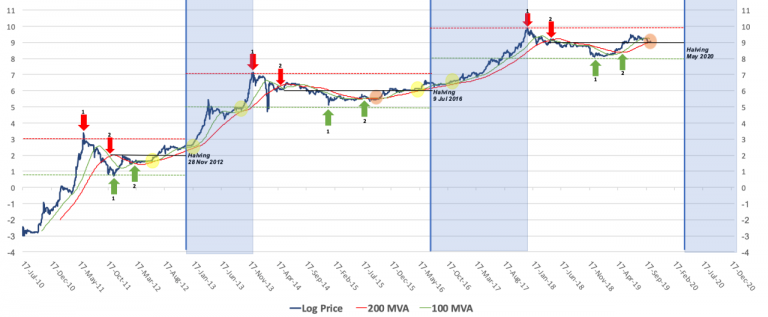
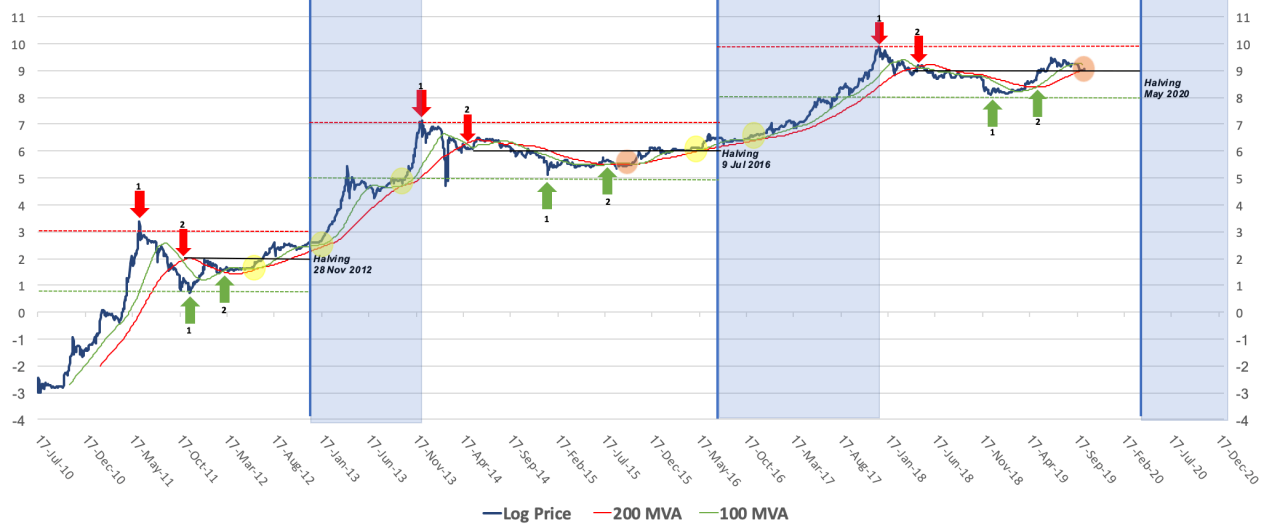
The genesis of Bitcoin, a revolutionary digital currency, saw its price take shape in a world largely unfamiliar with crypto. This journey from its inception reveals a fascinating interplay of technological advancements, market forces, and public perception. Understanding the initial price and market conditions provides crucial context for comprehending Bitcoin’s subsequent evolution.
This exploration delves into the intricate factors that influenced the early Bitcoin price, examining the technological landscape, economic climate, and the initial adoption rate. We’ll also uncover the major events that shaped the price fluctuations in those formative years.
Initial Bitcoin Price and Market Conditions
Bitcoin’s initial launch marked a significant moment in the digital currency landscape, but its early price and market conditions were vastly different from today’s environment. The nascent market was characterized by uncertainty and rapid volatility, reflecting the experimental nature of the technology and the lack of established infrastructure.The early days of Bitcoin were characterized by a steep learning curve for both investors and developers.
The price fluctuations were dramatic and often unpredictable, mirroring the nascent state of the market. The initial price was low, reflecting the limited understanding of Bitcoin’s potential and the relatively small number of early adopters.
Initial Price and Market Value
The very first Bitcoin transaction, recorded on January 3, 2009, was not tied to a specific price. Bitcoin’s value was initially expressed in terms of the software’s development and community’s activity, not an established market price. The first widely recognized market value emerged later, when Bitcoin began to be traded on rudimentary online exchanges. Initial trading volumes were low and price fluctuations were substantial.
It was a market in its infancy, and the lack of regulatory oversight contributed to the volatility.
Prevailing Market Conditions
The economic climate in the early 2000s was marked by a significant degree of uncertainty. The dot-com bubble burst had recently occurred, leaving many investors wary of new technologies and ventures. The prevailing financial climate played a role in the initial low adoption rate and limited price action. Furthermore, the technological landscape was vastly different from today’s sophisticated environment.
The internet was less ubiquitous, and digital currencies were largely unknown to the general public. There were no established payment gateways or widespread infrastructure for Bitcoin transactions, contributing to the slow adoption process.
Adoption Rate and Reasons
Bitcoin’s initial adoption rate was low compared to its current popularity. The reasons for this low adoption are multifaceted. Early adopters were predominantly tech-savvy individuals and early investors, rather than mainstream consumers. The lack of widespread awareness and understanding about Bitcoin’s potential, combined with a lack of established payment infrastructure, made mass adoption challenging. Additionally, the associated risk and volatility deterred many potential users.
Major Events Influencing Price Fluctuations
The early Bitcoin market was heavily influenced by various events. These events often triggered significant price swings, reflecting the volatile nature of the early market. The price fluctuations were not always directly tied to fundamental factors, often influenced by market sentiment, media coverage, and speculative activity.
| Date |
Price (USD) |
Influencing Event |
| 2009-01-03 |
0 |
First transaction recorded |
| 2010 |
~0.0000001 to ~1 |
Initial exchange platforms emerged, early adopters and community activity |
| 2011 |
~30 to ~300 |
Media coverage, early price surge followed by significant downturn |
| 2012-2013 |
~10 to ~1000 |
Growing interest from investors, media hype, speculative trading |
Bitcoin’s Early Development and Adoption
Bitcoin’s initial development and adoption were driven by a combination of technological innovation, a passionate community, and the inherent allure of a decentralized digital currency. Early adopters navigated a complex landscape of technological limitations and regulatory uncertainty, demonstrating significant resilience and foresight in the face of these challenges.The core technological advancements that propelled Bitcoin’s early development centered around the creation of a secure and transparent digital ledger.
This was achieved through cryptographic hashing, creating a tamper-proof record of transactions. The distributed nature of the blockchain, replicated across a network of computers, contributed to the system’s robustness and resistance to single points of failure.
Technological Advancements Shaping Early Bitcoin
Early Bitcoin development relied heavily on advancements in cryptography and distributed ledger technology. The creation of a secure and decentralized digital ledger was a monumental achievement, requiring innovative solutions to address the challenges of data integrity and security in a distributed environment. This involved sophisticated cryptographic hashing algorithms to ensure immutability of transaction records, and peer-to-peer networking protocols to facilitate secure and transparent communication across the network.
Key Individuals and Organizations Involved in Early Adoption
Early adopters of Bitcoin included a diverse group of individuals and organizations, often driven by a belief in the potential of the technology and a desire for financial freedom. Early Bitcoin enthusiasts played a crucial role in spreading awareness and building the initial community around the currency. These individuals and organizations were crucial in testing the system, identifying vulnerabilities, and driving further development.
The role of these early adopters was crucial to shaping the future of Bitcoin.
Challenges and Opportunities Faced by Early Adopters
Early Bitcoin adopters faced numerous challenges, including a lack of widespread understanding and acceptance of the technology, fluctuating market conditions, and regulatory uncertainty. The volatility of the Bitcoin market presented significant risks to early investors. However, these challenges were offset by opportunities to participate in the creation of a new financial system and benefit from potential gains. Early adopters also faced the challenge of dealing with limited infrastructure and support, relying on their own knowledge and resources to navigate the early phases of the market.
Comparison of Initial and Current Adoption Rates
The initial adoption rate of Bitcoin was significantly lower than the current rate, reflecting the nascent stage of the cryptocurrency market. Initial adoption was driven by a relatively small but passionate community of early adopters. Current adoption rates are significantly higher, reflecting increased mainstream awareness, institutional investment, and the wider integration of Bitcoin into the global financial system.
This growth highlights the evolution of Bitcoin from a niche technology to a widely recognized asset class.
Evolution of Key Bitcoin Features Over Time
| Feature |
Initial Version |
Current Version |
| Transaction Speed |
Relatively slow |
Significantly faster |
| Transaction Fees |
Often high |
Generally lower, with variable fee structures |
| Security Measures |
Improved continuously |
Robust and advanced security protocols |
| Scalability |
Limited |
Ongoing development to improve scalability |
This table showcases the evolution of key Bitcoin features over time, reflecting the constant improvements and adaptations that have occurred since the early days. These improvements reflect a concerted effort to enhance user experience and address the limitations of the initial design.
Cryptocurrency Context
Cryptocurrencies represent a fascinating and rapidly evolving field, fundamentally altering how we perceive and utilize digital value. Their emergence stems from a confluence of factors, including dissatisfaction with traditional financial systems, a desire for decentralization, and technological advancements. This section delves into the historical context, motivations, and key distinctions of cryptocurrencies, particularly focusing on the genesis of Bitcoin and its subsequent impact.The concept of digital currencies predates Bitcoin, evolving from early experiments with digital cash systems and cryptographic protocols.
These early forays laid the groundwork for the more sophisticated and decentralized systems we see today. Understanding this history is crucial for appreciating the unique characteristics of Bitcoin and its successors.
Historical Overview of Cryptocurrency
Early attempts at digital currencies, while not achieving widespread adoption, explored the potential of using cryptography to secure and manage digital assets. These experiments provided the foundational building blocks for later developments in the field. Examples include concepts like electronic cash and early digital currencies developed in academic or research settings. These initiatives, while often limited in scope, demonstrated the potential for decentralized digital value systems.
Motivations Behind Cryptocurrency Creation
Several key motivations fueled the creation of cryptocurrencies. A common thread was the desire for financial freedom and control, often stemming from perceived shortcomings or inefficiencies in traditional financial institutions. Concerns about transaction fees, censorship, and the limitations of existing systems played a significant role. Additionally, a strong interest in technological innovation and the potential for a more decentralized and transparent financial system drove the development of these alternative models.
The potential for broader financial inclusion and access to financial services for underserved populations also contributed to the impetus.
Key Differences Between Early Bitcoin and Other Cryptocurrencies
Bitcoin, while the first major cryptocurrency, established a unique set of principles and protocols. Distinguishing characteristics include its decentralized nature, the use of blockchain technology, and its limited supply. Early cryptocurrencies often lacked these features, operating as more traditional digital tokens. Bitcoin’s focus on a secure and transparent system, coupled with the scarcity mechanism, set it apart from its predecessors.
Key differences manifested in the underlying consensus mechanisms, security protocols, and intended applications.
Technical Underpinnings of Early Bitcoin
Bitcoin’s architecture, built on the foundation of cryptographic hashing and a distributed ledger (blockchain), set a precedent for subsequent cryptocurrencies. The use of cryptography ensured security and integrity of transactions, while the decentralized nature of the blockchain facilitated transparency and immutability. The focus on a secure, transparent, and decentralized system was a critical factor in the design and development of early Bitcoin.
This approach contrasted with the more centralized and proprietary models of some early digital currencies.
Economic and Social Implications of Cryptocurrency’s Emergence
The emergence of cryptocurrencies has sparked a significant debate about their economic and social implications. The potential for disrupting traditional financial systems, fostering innovation, and increasing financial inclusion is undeniable. However, concerns about volatility, security risks, and the potential for illicit activities also need to be addressed. The societal impact of cryptocurrencies remains a subject of ongoing discussion and analysis.
Evolution of Cryptocurrency Types
| Cryptocurrency Type |
Description |
Key Features |
| Bitcoin (BTC) |
First and most well-known cryptocurrency. |
Decentralized, limited supply, blockchain-based. |
| Altcoins |
Alternative cryptocurrencies. |
Various functionalities, often focusing on specific applications. |
| Stablecoins |
Cryptocurrencies pegged to a stable asset, like the US dollar. |
Lower volatility, designed for utility in financial transactions. |
| Central Bank Digital Currencies (CBDCs) |
Digital currencies issued by central banks. |
Potential for greater financial inclusion and efficiency. |
The table above provides a basic overview of the evolution of cryptocurrency types. Each type has unique characteristics that cater to different needs and applications, reflecting the dynamic development of the cryptocurrency landscape.
Early Bitcoin Price Volatility
Bitcoin’s early days were characterized by dramatic price swings, a phenomenon largely attributed to the nascent nature of the market and the unpredictable forces of speculation. This volatility, while challenging for investors, also served as a catalyst for both adoption and scrutiny of the cryptocurrency. The rapid fluctuations in value made price tracking and analysis critical for understanding the evolving market dynamics.
Extreme Price Fluctuations
Bitcoin’s price experienced substantial and unpredictable fluctuations in its early years. Significant spikes and crashes were common, creating an environment where both immense gains and substantial losses were possible. This volatility was a defining characteristic of the nascent cryptocurrency market, reflecting its susceptibility to shifts in market sentiment and speculation. The lack of established regulatory frameworks and widespread adoption further contributed to the extreme price swings.
Factors Contributing to Volatility
Several factors contributed to the extreme volatility in Bitcoin’s early price action. Speculation played a significant role, with investors often buying and selling based on perceived future value rather than intrinsic worth. Market sentiment, driven by news cycles and social media trends, frequently influenced price movements. Limited trading volume and liquidity often exacerbated price swings, as large orders could impact prices disproportionately.
The overall lack of understanding about Bitcoin and its potential use cases among the wider public also contributed to this instability.
Methods for Tracking Early Price Action
Early price tracking relied on various methods, including price aggregation websites and forums dedicated to Bitcoin discussion. The lack of standardized data collection meant different sources sometimes presented varying price data. As the market matured, more robust data collection and analysis tools emerged, enabling more precise tracking of price movements.
Timeline of Major Price Spikes and Crashes
The following table presents a snapshot of major price spikes and crashes in Bitcoin’s early years. This is not an exhaustive list, but it highlights key periods of significant price action.
| Date |
Event |
Approximate Price (USD) |
| Early 2011 |
Initial price surge |
Low |
| Late 2011 |
First significant price crash |
Low |
| 2013 |
Major price spike |
High |
| 2013-2014 |
Significant price crash |
Low |
| 2017 |
Bull run |
High |
| 2018 |
Bear market |
Low |
Note: Exact dates and prices may vary depending on the data source. This table is intended to illustrate the broad patterns in price fluctuations rather than provide precise data points.
Visual Representation of Price Action
Unfortunately, I cannot create a visual chart here. However, if you were to research online, you would find numerous charts illustrating Bitcoin’s price history. These charts would likely show the rapid and significant price fluctuations that characterized Bitcoin’s early trading. Key elements to look for in these charts include the magnitude of price changes, the frequency of these changes, and the correlation between price movements and market events.
Influence of Media and Public Perception
The early days of Bitcoin saw a rapid rise in public interest, heavily influenced by media coverage. This early buzz, often coupled with speculation, played a crucial role in shaping investor sentiment and market dynamics. The narrative surrounding Bitcoin, whether positive or negative, directly impacted its price movements. Understanding this interplay between media, public opinion, and market trends is essential for grasping the early evolution of the cryptocurrency.Early media coverage, often sensationalized, frequently painted Bitcoin as a revolutionary technology, a speculative investment, or both.
This multifaceted portrayal often contributed to volatility, as investors reacted to varying news reports. News outlets, from mainstream publications to specialized financial blogs, played a significant role in spreading knowledge about Bitcoin, often through articles, podcasts, and social media discussions. The sheer volume of information, both accurate and inaccurate, contributed to the public’s overall understanding and perception of Bitcoin.
Role of Media in Shaping Public Perception
Media outlets, both traditional and emerging, significantly influenced the public’s understanding and perception of Bitcoin. Mainstream media, while initially cautious, began to cover Bitcoin as a result of growing interest and price fluctuations. This coverage, though often simplified or misrepresented, introduced the concept to a wider audience. Specialized financial media, often focusing on technology and finance, provided more in-depth analysis, contributing to a more nuanced understanding.
Social media platforms also played a key role, amplifying information and fostering discussion, sometimes leading to rapid shifts in sentiment.
Analysis of Media Coverage Influence on Investor Sentiment
The nature of media coverage directly impacted investor sentiment. Positive articles and news often fueled optimism and increased buying pressure, while negative reports or regulatory concerns led to sell-offs and price declines. The speed and reach of social media amplified these effects, leading to rapid price swings. Investor sentiment became increasingly intertwined with the narrative surrounding Bitcoin in the media.
For example, news about potential regulatory hurdles or security breaches could quickly trigger widespread selling pressure. The immediacy and broad reach of social media created a dynamic feedback loop, impacting both investor decisions and market trends.
Role of Public Opinion in Driving Bitcoin Price Movements
Public opinion played a pivotal role in driving Bitcoin price movements. The perceived legitimacy and future potential of Bitcoin directly impacted investor decisions. A positive narrative, often fueled by media coverage, could result in increased investment and price appreciation. Conversely, concerns about Bitcoin’s security, its regulatory status, or its potential for misuse led to sell-offs and price declines.
The interplay between public opinion, media coverage, and market trends was complex and dynamic, often exhibiting significant volatility.
Key Figures and Their Contributions to Spreading Bitcoin Knowledge
Several individuals and organizations played a crucial role in disseminating knowledge about Bitcoin. Early adopters, tech enthusiasts, and financial commentators frequently shared information through various platforms, including blogs, forums, and social media. These individuals often helped to build community and support the growth of Bitcoin’s user base. The contributions of these figures were crucial in bridging the gap between Bitcoin’s technical aspects and the public’s understanding.
Table Categorizing Different Media Outlets and Their Coverage of Bitcoin
| Media Outlet Category |
Coverage Description |
| Mainstream News Outlets (e.g., The New York Times, BBC) |
Initial coverage was often cautious, with Bitcoin presented as a speculative investment. Later coverage addressed Bitcoin’s growing adoption and market cap. |
| Financial News Publications (e.g., Bloomberg, Reuters) |
Provided more in-depth analysis, focusing on market trends and financial implications of Bitcoin. Increased coverage as Bitcoin’s market cap grew. |
| Tech News Outlets (e.g., TechCrunch, Wired) |
Highlighted Bitcoin’s technological aspects, often focusing on its potential and innovation. |
| Cryptocurrency Specific Publications (e.g., CoinDesk, Cointelegraph) |
Dedicated coverage, providing in-depth analysis, news, and community discussions focused on the cryptocurrency space. |
| Social Media Platforms (e.g., Twitter, Reddit) |
Facilitated rapid dissemination of information, fostering community and driving trends, including both positive and negative narratives. |
Bitcoin’s Relationship to Other Markets
Bitcoin’s early days saw its price fluctuate wildly, and its relationship with other asset classes was complex and often unpredictable. Understanding how bitcoin performed in comparison to traditional markets like gold and stocks is crucial to understanding its early adoption and subsequent price action. The correlation (or lack thereof) between these assets provides insight into bitcoin’s unique characteristics as a digital asset.Bitcoin’s price movement wasn’t always directly tied to traditional markets.
Early investors often looked to the asset’s decentralized nature as a potential hedge against economic downturns, viewing it as an alternative investment rather than a direct correlation to gold or stocks.
Bitcoin Price Correlation with Gold
Bitcoin’s early price action showed a complex relationship with gold prices. While some investors viewed bitcoin as a digital gold, the correlation wasn’t consistently strong or predictable. Periods of high volatility in both markets often saw correlated movements, but other times the assets behaved independently.
Bitcoin Price Correlation with Stocks
The correlation between bitcoin and stock market performance was even less consistent during the early days. Sometimes, investors observed parallel movements, particularly during periods of market excitement. However, other times, bitcoin’s price movements diverged significantly from the stock market, highlighting the unique characteristics of this new asset class.
Comparative Performance Analysis
This table illustrates a comparison of bitcoin’s performance against other assets during its early stages. Note that correlation data was often unreliable due to the nascent nature of the bitcoin market. Data accuracy and availability were limited.
| Asset |
Performance (Early Days) |
Correlation with Bitcoin |
| Gold |
Generally volatile, with periods of correlation and divergence |
Variable, often independent but occasionally correlated |
| Stocks (e.g., S&P 500) |
Unpredictable, with periods of similarity and significant divergence |
Variable, often independent but occasionally similar |
| Other Cryptocurrencies |
Highly variable, with potential for correlation based on market sentiment |
Variable, often influenced by broader cryptocurrency market conditions |
Impact of Market Conditions
The early market conditions surrounding bitcoin significantly impacted its price. Speculative trading, limited regulatory frameworks, and the lack of established market infrastructure all played a role in the asset’s unpredictable behavior. The lack of clear market fundamentals and high volatility created uncertainty for investors.
Early Bitcoin Mining and Transactions
Bitcoin’s initial adoption was marked by a unique and often challenging environment. The early days saw a significant learning curve for both miners and users, as the technology was still developing and the market was largely unregulated. Understanding the early mining and transaction processes is key to appreciating the evolution of Bitcoin.
Early Mining Practices and Technologies
The early Bitcoin network relied on a decentralized network of computers, called miners, competing to solve complex mathematical problems. These problems were crucial for verifying and adding new blocks of transactions to the blockchain. Early mining hardware primarily consisted of personal computers (PCs) equipped with powerful processors. Software solutions were equally crucial, enabling miners to connect to the network, participate in the verification process, and record transactions.
Mining algorithms were relatively simple compared to modern standards, allowing for a broader participation from various computational resources.
Early Bitcoin Transaction Process
Bitcoin transactions were initiated by users sending a transaction request to the network. These requests included information about the sender, recipient, and the amount being transferred. Miners, in their competitive effort to solve the mathematical problems, processed these transactions. Once a block was validated, the transactions within it were considered final and recorded on the public ledger. The transaction process, while functional, lacked the sophistication and speed of modern implementations.
Security and Scalability Challenges
Early Bitcoin transactions faced security challenges. While the cryptographic mechanisms provided a robust foundation, the network’s size and processing capacity were limited, leading to potential vulnerabilities. Scalability was also a significant concern. The system struggled to handle a large volume of transactions efficiently, potentially leading to delays or network congestion. These issues were directly related to the network’s capacity and the algorithms used to verify transactions.
Evolution of Bitcoin Mining Hardware and Software
Over time, mining hardware evolved significantly. The transition from PCs to specialized Application-Specific Integrated Circuits (ASICs) dramatically increased the computational power available for mining. This shift was driven by the need for faster and more efficient processing of transactions. Mining software also underwent substantial changes, becoming more sophisticated and efficient to accommodate the increasing computational demands and complexity of the Bitcoin network.
Technological Advancements and Challenges in Bitcoin Mining
| Technological Advancement |
Challenge Addressed |
Impact |
| Transition from PCs to ASICs |
Increased computational power |
Faster transaction processing, higher mining difficulty |
| Improved mining software |
Enhanced network efficiency |
Reduced transaction times, improved security |
| Increased mining difficulty |
Preventing excessive transaction throughput |
Increased security, reduced vulnerability |
| Development of mining pools |
Increased computational power for miners |
Improved efficiency, reduced reliance on individual miners |
Early Bitcoin Community and Ecosystem
The nascent Bitcoin community played a crucial role in shaping the early development and adoption of the cryptocurrency. Its characteristics, communication methods, and key contributors significantly influenced the trajectory of Bitcoin’s initial growth and price fluctuations. Understanding this period offers valuable insight into the forces that shaped Bitcoin’s early success and challenges.
Characteristics of the Early Bitcoin Community
The early Bitcoin community was largely comprised of tech-savvy individuals, programmers, and enthusiasts. Many were drawn to the decentralized nature of Bitcoin, its potential for financial innovation, and the allure of a new, emerging technology. A strong sense of community and shared vision fostered a unique environment for experimentation and collaboration. A notable feature was the active participation of early adopters who acted as evangelists, spreading awareness and encouraging further development.
Interaction and Communication Methods
Early communication within the Bitcoin community was primarily through online forums, mailing lists, and rudimentary social media platforms. These channels fostered discussion, problem-solving, and the exchange of information. Bitcoin’s whitepaper and the associated online forums became crucial hubs for understanding the technology and sharing ideas. Early adopters used these platforms to engage in technical discussions, answer questions, and contribute to the ongoing development of Bitcoin’s underlying software.
Key Contributors to the Early Bitcoin Ecosystem
Several individuals and groups significantly contributed to the early Bitcoin ecosystem. These included programmers who developed and maintained the Bitcoin core software, and early adopters who championed the technology. The contributions extended beyond the technical realm to encompass marketing, education, and community building. This collective effort was crucial for shaping the direction and early success of Bitcoin.
Notable figures, though not all easily identifiable at the time, played a critical role in the early community’s development.
Impact of Community Sentiment on Bitcoin Price
Community sentiment and discussions significantly influenced the early Bitcoin price. Positive feedback and the spread of excitement about the technology often correlated with price increases. Conversely, negative opinions or doubts could depress the price. This relationship underscores the importance of community engagement and trust in shaping the perception of Bitcoin, as well as the price of the asset.
Examples of Early Bitcoin Community Functioning
The early Bitcoin community operated through a network of forums, mailing lists, and dedicated websites. These platforms facilitated discussions on technical aspects of Bitcoin, the technology’s future, and potential applications. For example, Bitcoin’s forum threads were active hubs of technical discussions, problem-solving, and collaborative efforts. These exchanges highlighted the collaborative nature of the community, showcasing how individuals contributed to the project’s advancement.
End of Discussion
In conclusion, the initial Bitcoin price and its volatility were shaped by a complex interplay of factors, from technological advancements to public perception and market conditions. This analysis offers a valuable perspective on the early days of this groundbreaking digital asset, illuminating the path to its present-day prominence.
Clarifying Questions
What were the key technological advancements that shaped early Bitcoin development?
Early Bitcoin development relied heavily on the underlying blockchain technology. Key advancements included improvements in cryptography, transaction processing, and consensus mechanisms. These advancements laid the foundation for the network’s functionality and security.
How did the initial adoption rate of Bitcoin compare to the current rate?
Initial adoption was significantly lower than the current rate. Factors like lack of widespread awareness, limited accessibility, and concerns about volatility all contributed to a slower adoption curve compared to the current rapid pace.
What were some of the major events that influenced early Bitcoin price fluctuations?
Major events like announcements of significant technological improvements, news coverage, and regulatory developments played a substantial role in shaping the early price fluctuations. These events often triggered periods of price spikes and crashes.
What was the relationship between Bitcoin’s price and other asset classes during its early days?
The relationship between Bitcoin and other asset classes, such as gold and stocks, was often characterized by a lack of strong correlation in its early days. Bitcoin’s price was relatively independent, reflecting its unique nature as a digital asset.